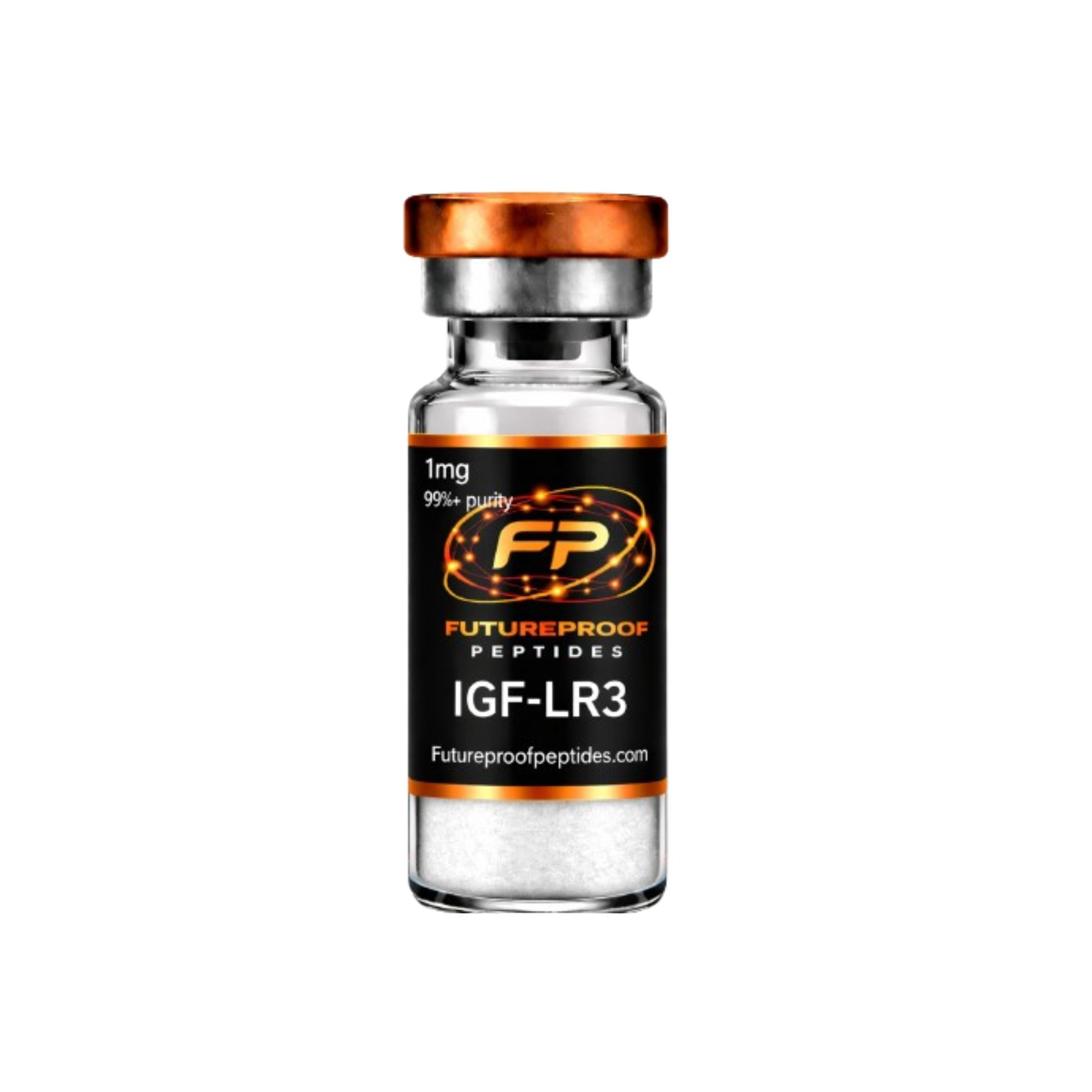
IGF-LR3 1mg is a research peptide based on insulin-like growth factor-1. It is a modified version of native IGF-1, designed with a longer half-life, which allows it to remain active for a longer period in controlled environments.
This extended activity, often referenced in the range of 20 to 30 hours, makes it useful in studies that look at how signalling pathways behave over time. Because of this, it is commonly used in models that focus on cell growth, protein synthesis, and tissue repair.
As a modified form of human insulin-like growth factor, it is often included in research that examines how cells respond to growth-related signals.
How It Works
IGF-1 LR3 interacts with the IGF-1 receptor, which plays a role in signalling pathways linked to cell growth and development. It is used to observe how these pathways respond when stimulated over a longer duration.
In simple terms, research focuses on how:
- Cells respond to growth signals
- Protein synthesis is supported
- Glucose uptake changes under different conditions
- Cellular activity is maintained over time
Because it has a longer half-life than native IGF-1, it allows for extended observation without the need for frequent reapplication. This makes it useful in models where timing and duration are important.
It is also studied in relation to IGF binding proteins, IGFBPs, which normally regulate how IGF-1 behaves in the body. The modified structure reduces this binding, allowing for a more direct interaction with receptors.
Why It Is Studied
There have been studies exploring how insulin-like growth factor pathways influence cell growth, tissue repair, and metabolic activity. IGF-1 LR3 is of interest because its structure allows it to remain active for longer compared to native IGF-1.
In simple terms, this area of study focuses on how cells grow, how they respond to signals, and how those processes are maintained over time.
It is also used in research that looks at how these pathways behave under different conditions, including variations in exposure and duration.
Where It Fits In Research
This research peptide is typically used in controlled setups where extended activity is required. Because of its longer half-life, it is suited to models that track changes over a longer period.
Common areas of focus include:
- Cell growth and development
- Protein synthesis over time
- Tissue repair processes
- Changes in glucose uptake
It may also be included in models that explore how higher exposure levels, such as high-dose conditions, affect cellular response. These setups are used to better understand how cells behave under different levels of stimulation.
Side Effects And Limitations
Information on side effects is limited. Most available data focuses on how the compound interacts with growth-related pathways rather than long-term outcomes.
Because it influences pathways linked to insulin-like growth factor, responses may vary depending on the conditions used.
Some models reference changes such as water retention or variation in glucose uptake, though these observations depend on setup and exposure.
Long-term effects are not fully established, and all use is limited to controlled environments.
Preparation And Handling
The vial is supplied as a dry powder and requires preparation before use. This is typically done using bacteriostatic water to create a solution.
Once prepared, it should be handled carefully to maintain consistency. Standard practices include:
- Keeping the temperature stable
- Avoiding repeated freeze and thaw cycles
- Using consistent preparation methods
Following a consistent approach helps reduce variation and improve reliability across different setups.
Storage
The dry format helps maintain stability before preparation. Proper storage conditions are important to preserve integrity and performance.
Disclaimer: This product is sold strictly for research purposes only. Not for human consumption.