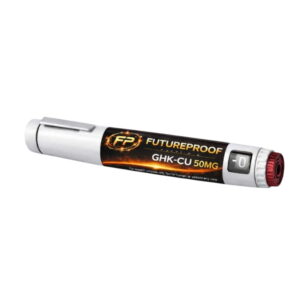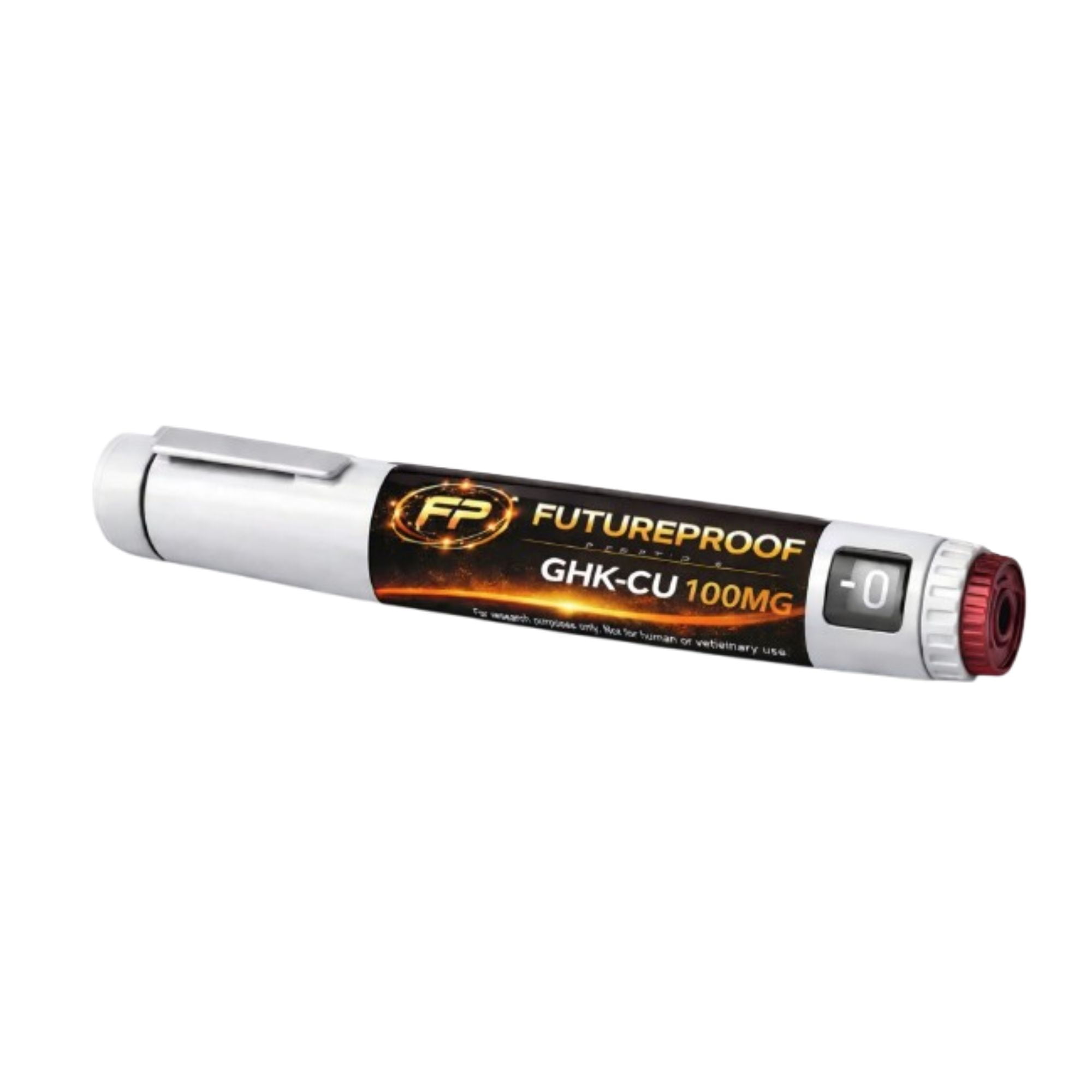
Our GHK-Cu 100mg pen contains GHK-Cu, a naturally occurring copper-binding tripeptide studied for its role in cellular signalling, tissue remodelling, and extracellular matrix activity. The compound forms when the peptide GHK binds to a copper ion, creating a complex that has been widely investigated in skin, connective tissue, and hair follicle research.
GHK-Cu has been identified naturally in human plasma and other biological fluids. Its ability to bind copper is important because copper participates in several enzyme systems involved in structural tissue maintenance and repair.
What Is GHK-Cu?
GHK-Cu is a copper peptide formed from the amino acid sequence glycyl-L-histidyl-L-lysine bound to a copper ion.
The peptide acts as a carrier for copper, allowing researchers to study how copper-dependent enzymes and signalling pathways influence tissue structure and cellular behaviour.
Studies focus on several biological areas, including:
- Extracellular matrix organisation
- Collagen and elastin-related pathways
- Tissue remodelling
- Cellular response to injury
- Hair follicle biology
This broad biological profile is one reason GHK-Cu remains an active subject in peptide and regenerative biology research.
Why Is GHK-Cu Researched?
Research involving GHK-Cu often centres on how cells respond to damage and how structural tissue is maintained over time.
One area of interest is tissue remodelling. This process involves the breakdown, repair, and reorganisation of the proteins that make up the extracellular matrix. Researchers study how GHK-Cu may influence these processes through copper-dependent signalling and enzyme activity.
Another area of study involves oxidative stress and inflammatory signalling, both of which can affect tissue structure and cellular function.
Because GHK-Cu is naturally occurring, researchers also use it to investigate how endogenous peptide signalling changes with age and tissue condition.
GHK-Cu And Hair Follicle Research
GHK-Cu has also been studied in models involving the hair follicle and surrounding tissue.
Research in this area looks at how copper peptide signalling may influence follicular cells, extracellular matrix activity, and the local tissue environment around the follicle.
Scientists are particularly interested in whether these pathways may affect:
- Hair follicle structure
- Cellular activity around the follicle
- Local tissue remodelling
- Supportive matrix proteins surrounding the follicle
These findings remain experimental and should not be interpreted as established treatment outcomes.
What Have Studies Examined?
Published studies involving GHK-Cu have examined several cellular and structural processes rather than a single biological effect.
- Collagen-related gene expression
- Elastin and extracellular matrix activity
- Cell migration during tissue repair models
- Copper transport and enzyme activation
- Hair follicle and skin-related cellular activity
The scientific value of GHK-Cu comes from this combination of peptide signalling and copper biology, giving researchers a way to study how trace-metal binding may influence wider cellular systems.
Pen Format & Storage
Our GHK-Cu 100mg Pen is supplied in a controlled pen format intended for laboratory handling and analytical research protocols.
Storage conditions should remain stable throughout the research period. Protect the formulation from excessive heat, moisture, and direct light, and follow the supplied product specification for temperature requirements.
Disclaimer: This product is supplied strictly for laboratory research purposes only. Not for human or animal consumption.